HOW ONSITE TEMPORARY HOUSING IS SUSTAINABLE AND ENERGY EFFICIENT
benrothwell
Jun 3rd, 2024
Across construction, infrastructure, events and other commercial sectors, there is now far greater scrutiny on how businesses manage their environmental impact. Clients, investors, regulators and even the general public increasingly expect companies to demonstrate responsible energy use, lower emissions and more sustainable working practices.
At the same time, regulations around commercial energy consumption and carbon reporting have tightened in recent years. Businesses face stronger expectations to monitor usage, reduce waste and show evidence of compliance. Failure to meet these requirements can lead to financial penalties, higher operating costs and reputational damage - all of which place sustainability much higher on the agenda for project managers and decision-makers.
Against this backdrop, onsite temporary accommodation has become an effective way for businesses to meet these expectations while still giving teams the comfortable, practical facilities they need. This blog explores how high-quality onsite cabins can contribute to sustainability goals, how their design helps reduce energy use and how flexible deployment can support both environmental responsibility and cost savings across projects.
THE SUSTAINABILITY OF ONSITE ACCOMMODATION
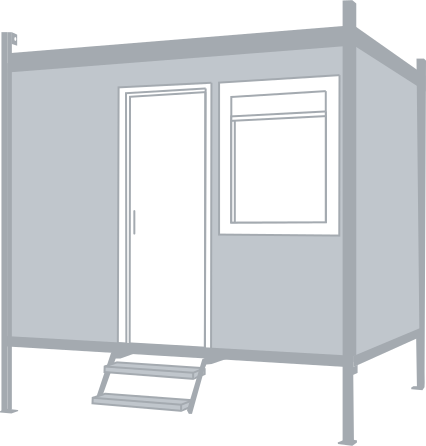
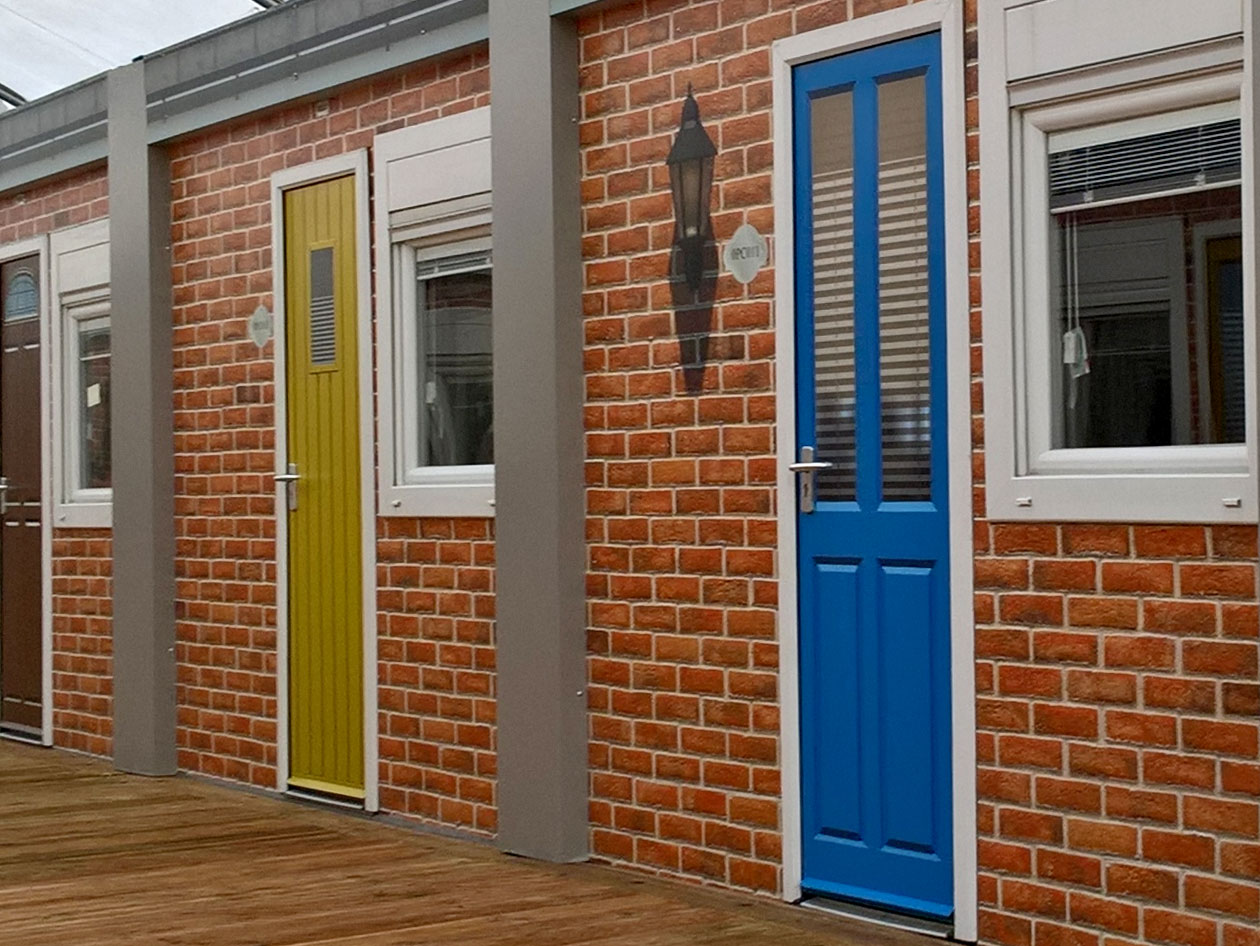
Onsite accommodation typically refers to temporary structures such as modular buildings, designed to provide housing or workspace on construction sites and other locations. The sustainability of these units is largely determined by their construction materials, life cycle and how they are reused across projects.
Using sustainable materials with lower embodied energy and higher durability helps reduce the environmental impact of each unit. Unlike permanent buildings, these modular cabins are designed to be reused across multiple construction projects, promoting waste reduction and extending their operational life.
Once a unit completes its first phase of use, it can be refurbished, relocated or recycled - a key aspect of the circular economy, where resources are reused rather than discarded. This reduces construction waste, lowers carbon footprints and makes temporary housing a sustainable option for various industries.
THE ENERGY EFFICIENCY OF TEMPORARY HOUSING
A major environmental advantage of temporary housing lies in its energy performance. These temporary buildings are built with thermal efficiency and energy conservation in mind, offering features such as:
High-quality insulation for better thermal control and reduced heating demand.
Energy-efficient lighting and appliances to lower overall energy usage.
Renewable energy systems such as solar panels that reduce reliance on the grid.
Natural ventilation and materials that maintain a comfortable internal climate.
These features minimise greenhouse gas emissions, reduce energy use and improve environmental performance compared to traditional building methods. Lower energy consumption not only benefits the environment but also reduces operating costs, creating a strong trade off between sustainability and affordability.
CUSTOMISATION AND CONTROL OF ENERGY USAGE
One of the most notable advantages of onsite accommodation is the ability to tailor energy consumption according to specific project needs. Project and construction site managers can control their energy use by deciding the exact number and type of cabins required for their site. This customisation ensures that energy is not wasted on unneeded units, allowing for a more efficient and responsible use of resources.
The flexibility offered by these portable units means that energy consumption can be scaled up or down depending on the phase and size of the project. This adaptability is not just beneficial for managing costs but also plays a crucial role in reducing the overall carbon footprint of construction and other industry projects. By providing only the necessary amount of accommodation, companies can meet their environmental responsibilities while maintaining operational efficiency.
BUNKABIN’S COMMITMENT TO LOWERING ENVIRONMENTAL IMPACT
Known for our practical and comfortable solutions suitable for a wide range of industries, Bunkabin stands out as a leading supplier of portable accommodation. A key aspect of Bunkabin's offerings is our commitment to sustainability. This is exemplified by our site sleepers' average daily energy consumption of 9.6kWh, a figure that reflects a conscientious approach to energy use.
Bunkabin's dedication to sustainable practices extends to our logistics as well. We have embraced a transportation strategy that aligns with BS8901, a sustainability management system for events. This ensures that up to four Junior Deluxe Sleepers can be transported on a single wagon, optimising the delivery process to be as economical and environmentally friendly as possible.
This approach not only minimises the carbon footprint associated with transportation but also underscores Bunkabin’s commitment to integrating environmental considerations into every facet of our operations.
BUNKABIN’S ENERGY-EFFICIENT FEATURES
Bunkabin's units are designed with energy efficiency at their core. Each unit, including our popular Junior Deluxe and Bespoke Sleepers, is equipped with features that reduce energy consumption while maintaining comfort and practicality. Key among these features is the sturdy steel roof and thermostatically-controlled heating, providing a well-insulated and temperature-regulated environment within.
Moreover, all Bunkabin units conform to necessary building regulations, which include standards for energy efficiency. This adherence not only ensures compliance with legal requirements but also demonstrates Bunkabin's commitment to providing solutions that are both user-friendly and environmentally responsible.
These energy-efficient features in Bunkabin’s units not only cater to the immediate needs of their clients but also contribute to the broader goal of reducing energy usage and promoting sustainability in the industry.
CHOOSE SUSTAINABLE AND EFFICIENT ACCOMMODATION BY WORKING WITH BUNKABIN
Sustainability and energy efficiency are now essential in the construction industry and beyond. Onsite temporary housing offers a sustainable, eco friendly and cost effective solution for businesses that want to reduce their carbon footprint while maintaining a comfortable living and working environment.
Bunkabin’s cabins demonstrate that temporary accommodation can combine practical benefits with strong environmental performance. By using sustainable materials, reducing energy consumption and adopting renewable energy technologies, we help businesses operate responsibly and efficiently.
To learn more about our sustainable temporary accommodation, call us today 0345 456 7899, or fill out an online contact form and we'll be in touch at a time suitable for you.
Testimonials
We approached Bunkabin in 2015 to deliver a turnkey accommodation solution for our performers from around the world who were performing at Her Majesty The Queen’s 90th Birthday Celebrations at Windsor this year. Subsequently 200 Bunkabins were ordered and work started on the planning of such a major logistical operation. In 22 days, 200 Bunkabins, complete with bedding kits, were delivered and installed and when our performers arrived they were amazed that we could offer an on-site solution that offered everything they needed. It made for a real village atmosphere with all nations joining together and we couldn’t have asked for more.
Bunkabins drivers were amazing – taking great care when loading and offloading not to damage the grass in the Private Grounds of Her Majesty The Queen and all in all the Bunkabins worked perfectly
Nick Brooks-Ward, H Power Group - Event Planning Services
Over the last 6 years we have increased the Student Village from initially 30 up to currently 274 en-suite Student Sleepers. The Student Village Company provide us with a flexible accommodation capacity, so as long as we have land available, we no longer need to turn away a student because of accommodation shortages.
It is very difficult to predict exact intake numbers however The Student Village Company are able to provide additional capacity only a few weeks before freshers week. The decking, canopy and decals make an enormous difference. The students love them.
While Bunkabins aren’t complicated... There will undoutedly be a raft of questions you will need answering. So with this in mind, we have compiled a list of the most frequently asked ones and, handily, provided the answers to boot.
The aim was to find an accommodation solution that could be deployed quickly and safely, while exceeding industry standards of electrical, fire and structural safety and providing a comfortable living…
As a successful agricultural business, Valley Produce depends heavily on having the right onsite accommodation solutions in place for its seasonal workers. Bunkabin has been able to provide those…
How do you solve an issue of having more students arriving than you have available accommodation? Bunkabin works with Reaseheath College to support them as they expand,enabling them to grow their…
The Royal Navy found themselves requiring 302 more bed than they had available. Rather than costly and time-consuming building work being initiated an alternative tempory solution was sort and…
Her Majesty’s 90th Birthday Party was a celebration of The Queen’s life and involved more than 1,500 participants from around the United Kingdom and the World. It focused on her love of horses, her…
Bunkabin has long had a great working relationship with Glastonbury Festival. Our sleepers and shower blocks offer their management, staff and the supply personnel the comfortable environment they…