STUDENT ACCOMMODATION CONSTRUCTION DELAYS: WHAT HAPPENS WHEN NEW STUDENT HALLS AREN'T READY?
benrothwell
Jul 23rd, 2026
New student halls are usually planned around one immovable deadline: the start of the academic year. When a development misses that date oris otherwise delayed, even by a few weeks, universities are left with hundreds of students due to arrive and nowhere suitable for them to live.
Beyond any accommodation shortage, room allocations need to be changed, arrival plans rewritten and additional support put in place for students who have paid up front and expect to move directly into the halls they were promised.
For university estates, accommodation, procurement and student services teams, the pressure is then on to protect student welfare, keep operations running and find an alternative while the permanent development remains an active construction site.
This is wheretemporary student accommodation can offer an easy to install and hard to beat contingency plan. Here, the portable building hire specialists at Bunkabin explain how even the most detailed construction schedules can fall afoul of delays, and how universities are turning temporary buildings into a long term success story.
WHEN NEW STUDENT HALLS MISS THE ACADEMIC DEADLINE
Purpose-built student accommodation faces tighter delivery constraints than many other construction projects. A commercial development that opens several weeks late may be inconvenient, but a hall of residence needs to be ready when students arrive.
By that point, the university may already have:
Offered rooms to students
Accepted deposits or accommodation payments
Issued tenancy or licence information
Allocated students to particular buildings
Organised arrival dates and welcome activities
Planned staffing, security and maintenance provision
If the building cannot be occupied, the university needs to confirm how many beds are affected and how long the delay is likely to last. That can be difficult when the construction programme is still changing.
The immediate pressure often falls on accommodation and student services teams. Existing halls may already be full, while suitable private accommodation near the university may be limited. Where rooms have already been promised or contracted, the institution may need to arrange suitable alternative accommodation or provide another remedy under its accommodation terms.
There is also a wider student welfare issue. Starting university is an unsettled period, particularly for first-year and international students. Uncertainty about where they will live will make it harder to settle in, meet new friends and focus on studying.
EVEN WELL-PLANNED PROJECTS GET DELAYED
No construction programme is completely free from risk. Universities and their development partners may have worked towards the academic deadline for months or years, only for circumstances on site to change.
Through our experience as a supplier to the construction industry, we know that delays frequently result from a combination of issues rather than one clear failure. Unexpected ground or site conditions can stop a project dead. Material shortages can slow things down, or make existing plans too expensive to continue. Poor weather and labour shortages can complicate things.
Unfortunately, even the best laid procurement plans can't factor in every potential cause of delay, and many factors are simply out of your control. Which is why planning contingency accommodation for students before the deadline is missed gives decision-makers more time to assess sites, services and availability. Waiting until students are about to arrive can limit the available options and jolt up costs in an already difficult situation.
WHAT ARE THE ALTERNATIVES TO COMPLETED STUDENT HALLS?
Depending on the existing land and infrastructure available at your university, you have several options to consider around alternative accommodation. Each is worth considering in a contingency plan, but some are easier to manage than others.
Spare rooms in existing halls
Using spare capacity within the university’s existing residence portfolio is the quickest answer when only a small number of beds are affected. However, many institutions already operate close to capacity at the start of the year. Reallocating rooms can also affect returning students, postgraduate provision and cause issues around accessibility provision. Existing halls are also unlikely to solve a substantial shortfall caused by a delayed halls of residence.
Private accommodation with bills included
Private student housing, houses in multiple occupation and rooms provided by local landlords may offer additional capacity. This can work where enough suitable properties are available in the right location, and through a reputable landlord.
Alongside the logistical issue of handling the transition, students could also be spread across different areas of a town or city, making it more difficult to provide transport, maintenance, security and welfare support. When plans are changing at short notice, the most convenient private accommodation may already have been taken by students conducting their own search.
Hotels
Hotels can provide beds quickly and may be suitable for a very short emergency stay. However, a hotel bedroom is not designed to function as a student home for several weeks or months.
Students may have limited storage, nowhere suitable to prepare food and little dedicated study or social space. The university may also face soaring nightly costs on a per person basis and uncertainty about how long rooms will remain available.
Temporary student accommodation
Temporary units allow a university to create additional capacity on a suitable site under a single, managed arrangement. Rather than placing students across several hotels or private houses, the institution can establish accommodation close to the university and provide a more consistent standard of room, security and support.
For many education providers, this is the most practical and straightforward response to student accommodation construction delays.
WHY TEMPORARY STUDENT ACCOMMODATION IS OFTEN THE MOST PRACTICAL SOLUTION
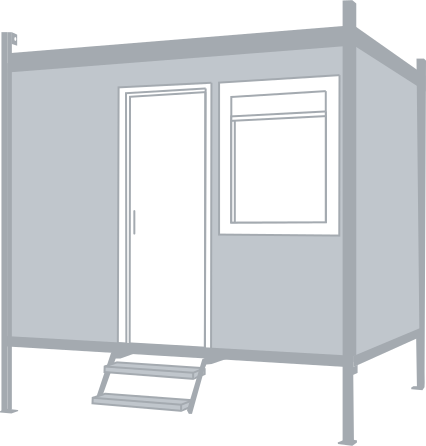
Bunkabin’s temporary student accommodation can be hired for a short period or remain in place for a full academic year. The number of units can be matched to the university’s requirements, whether the problem affects one part of a residence or an entire new development.
Single-occupancy units can provide students with:
a full-sized bed
storage
heating
an en-suite shower room and toilet
space to study
a private, self-contained room
This gives students more privacy and independence than many short-stay alternatives. It also gives the university greater control over the location, facilities and management of the temporary residence.
Bunkabin provides one point of contact for the supply, delivery and installation of the units. Additional portable toilets, showers, dining areas and welfare facilities can also be included where the university’s existing provision cannot support the temporary site.
Most importantly, the accommodation is flexible. It can stay in place while construction continues and be removed when the permanent halls are ready. If the completion programme changes again, the hire arrangement can be reviewed without committing the university to permanent extra housing it may no longer need.
Case study: Reaseheath College
When Reaseheath College needed more onsite student housing, the initial request was for 30 single units. As demand grew, the first order increased to 77 units, and the provision eventually developed into a Student Village with more than 270 single en-suite sleeper units.
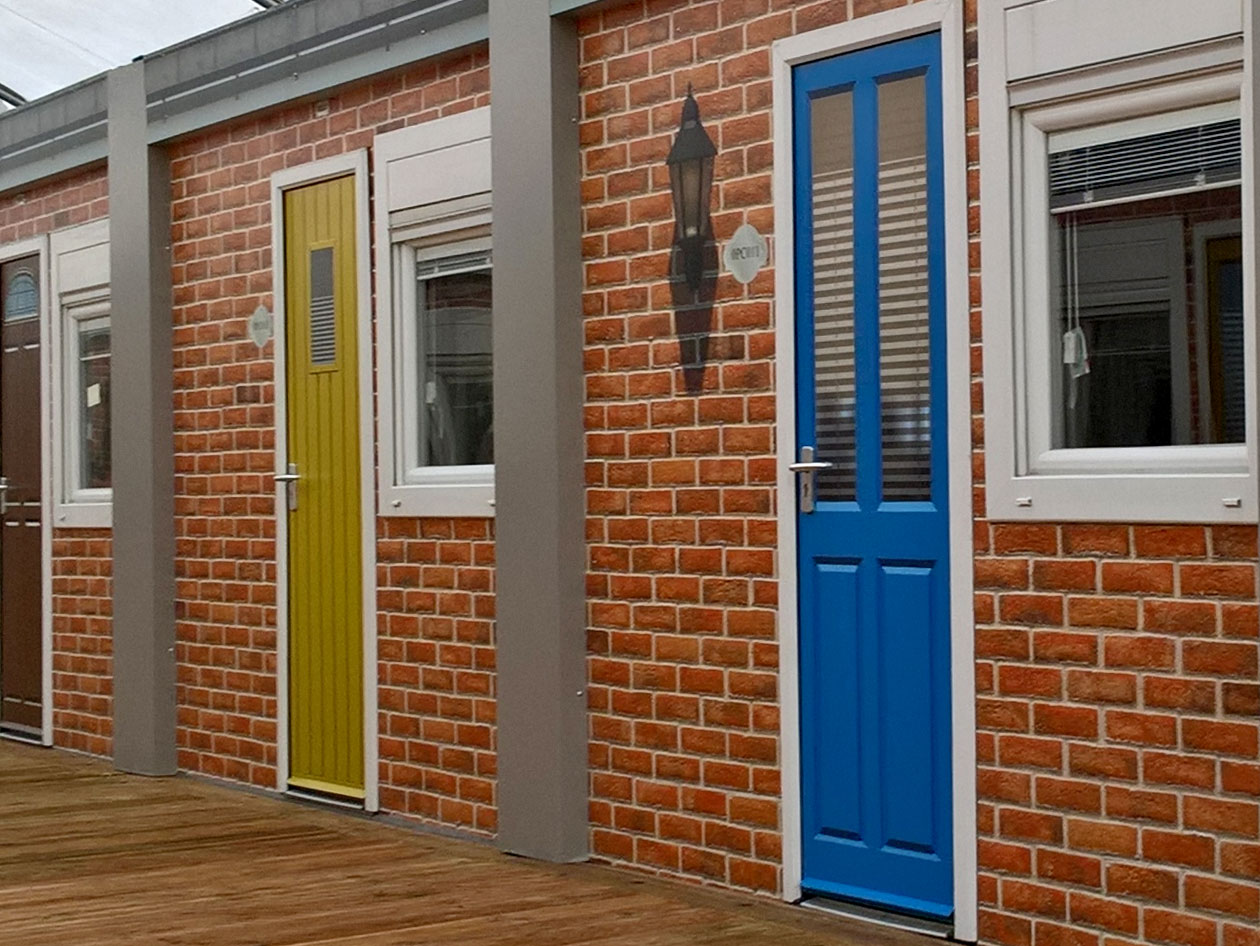
Decking and canopies were added to help create a connected residential environment rather than a series of isolated cabins. The flexible provision allowed the college to increase its accommodation capacity as student numbers grew.
HOW QUICKLY CAN BUNKABIN DEPLOY TEMPORARY ACCOMMODATION?
The physical installation of a Bunkabin unit can be very quick once the site is prepared. Units can be ready to use around 30 minutes after unloading, subject to the necessary services being available on site.
The overall programme will depend on:
how many students need accommodation
which units are required
current fleet availability
the location and condition of the site
delivery access
groundwork and service connections
planning and compliance requirements
whether supporting facilities are needed
Even a substantial scheme will not need to take long to install. Bunkabin manufactures its units in Britain, operates a large hire fleet and providesnationwide delivery and installation. The earlier you can make contact with us about your needs, the more opportunity there is to plan for the required number of units and prepare the site before students arrive.
SPEAK TO BUNKABIN ABOUT YOUR NEEDS
When new halls are delayed, universities do not need to rely on a complicated patchwork of hotel bookings, private landlords and repeated student moves.
With a suitable site and early preparation, Bunkabin can deliver comfortable, self-contained accommodation that remains in place until the permanent residence opens. The service can scale to meet the number of beds required, and we can handle full delivery and installation of your cabins.
Bunkabin has been manufacturing and supplying mobile accommodation since 1978. Our approach reflects a long-standing understanding of both construction programmes and the needs of the people who will live in its units.
To discuss temporary student accommodation for a delayed university development, call Bunkabin on 0345 456 7899 or request a quick quote.
Testimonials
We approached Bunkabin in 2015 to deliver a turnkey accommodation solution for our performers from around the world who were performing at Her Majesty The Queen’s 90th Birthday Celebrations at Windsor this year. Subsequently 200 Bunkabins were ordered and work started on the planning of such a major logistical operation. In 22 days, 200 Bunkabins, complete with bedding kits, were delivered and installed and when our performers arrived they were amazed that we could offer an on-site solution that offered everything they needed. It made for a real village atmosphere with all nations joining together and we couldn’t have asked for more.
Bunkabins drivers were amazing – taking great care when loading and offloading not to damage the grass in the Private Grounds of Her Majesty The Queen and all in all the Bunkabins worked perfectly
Nick Brooks-Ward, H Power Group - Event Planning Services
Over the last 6 years we have increased the Student Village from initially 30 up to currently 274 en-suite Student Sleepers. The Student Village Company provide us with a flexible accommodation capacity, so as long as we have land available, we no longer need to turn away a student because of accommodation shortages.
It is very difficult to predict exact intake numbers however The Student Village Company are able to provide additional capacity only a few weeks before freshers week. The decking, canopy and decals make an enormous difference. The students love them.
While Bunkabins aren’t complicated... There will undoutedly be a raft of questions you will need answering. So with this in mind, we have compiled a list of the most frequently asked ones and, handily, provided the answers to boot.
The aim was to find an accommodation solution that could be deployed quickly and safely, while exceeding industry standards of electrical, fire and structural safety and providing a comfortable living…
As a successful agricultural business, Valley Produce depends heavily on having the right onsite accommodation solutions in place for its seasonal workers. Bunkabin has been able to provide those…
How do you solve an issue of having more students arriving than you have available accommodation? Bunkabin works with Reaseheath College to support them as they expand,enabling them to grow their…
The Royal Navy found themselves requiring 302 more bed than they had available. Rather than costly and time-consuming building work being initiated an alternative tempory solution was sort and…
Her Majesty’s 90th Birthday Party was a celebration of The Queen’s life and involved more than 1,500 participants from around the United Kingdom and the World. It focused on her love of horses, her…
Bunkabin has long had a great working relationship with Glastonbury Festival. Our sleepers and shower blocks offer their management, staff and the supply personnel the comfortable environment they…