PLANNING PERMISSION AND REQUIREMENTS FOR STUDENT ACCOMMODATION
benrothwell
Apr 15th, 2024
Planning permission is a legal requirement for many types of development, including new builds or substantial alterations to existing properties. Forstudent accommodation, this often means converting a residential building into a House in Multiple Occupation (HMO) or creating purpose-built halls of residence.
To move projects forward, project managers must align proposals with local planning policies, taking into account environmental impact, infrastructure, and community needs. Requirements differ across the UK, so it’s best to understand the rules in your area from the start of your HMO development.
In this blog post, we set out the planning permission and requirements for student accommodation that you’ll need to keep in mind before moving ahead with your proposed development.
THE PROCESS OF SECURING PLANNING PERMISSION
Securing planning permission involves a series of steps to ensure compliance with UK regulations and enable project success:
Initial consultation: contact the local planning authority (LPA) to discuss your project plans and understand any specific requirements or constraints
Application submission: this should include all relevant plans, drawings and documents that demonstrate how the project complies with local planning policies.
Public consultation and decision: once submitted, the application goes through a period of public consultation, where objections or support can be raised by the community. The LPA will then assess the application against local planning policies, environmental factors and any feedback received during the consultation period.
Planning permission applications typically take 8 to 13 weeks to be decided upon. Undertaking development work without the necessary planning permission can result in an enforcement notice, requiring reversal of the changes. Ignoring such a notice is illegal and can lead to severe penalties.
Different regions in the UK might have unique planning requirements. Familiarise yourself with these variations so you can be sure your application complies with the specifics of your locality.
SPECIFIC REGULATIONS FOR STUDENT ACCOMMODATION
An HMO is a property rented out by at least three unrelated people, however there's no requirement for an HMO license for properties with less than five tenants forming two households.
Student accommodation projects must meet a set of regulations designed to make properties safe, compliant and suitable for the number of occupants. Where the property is classed as a HMO, these requirements are particularly strict.
An HMO is a property rented by three or more unrelated tenants sharing facilities such as kitchens or bathrooms. Most student houses fall into this category. In England and Wales, a licence is only mandatory for HMOs with five or more tenants, but in Scotland and Northern Ireland, every HMO must be licensed regardless of size. Licensing checks include compliance with safety standards, a clean criminal record and following the local code of practice.
Standards also cover space and safety requirements. The minimum room size is 6.51 square metres for single rooms and 10.22 square metres for doubles. Fire safety measures must include smoke alarms, fire doors, emergency lighting and extinguishers on every floor.
Local councils may set additional rules. Converting a property into an HMO can require specific planning permission, and penalties for non-compliance can be severe. For project managers, this makes thorough planning and close attention to local authority requirements essential.
PROJECT MANAGER RESPONSIBILITIES
Managing the construction of student accommodation comes with a wide range of responsibilities, from complying with planning permissions and regulations to keeping the project running smoothly on site.
Project managers are expected to handle:
Compliance with planning permissions and regulations: this covers local planning laws, building regulations and HMO licensing requirements. It’s essential to keep up to date with regional variations across the UK.
Liaising with local authorities: keeping an open line with planning departments and councils, managing the planning permission application, and responding to issues that may come up during public consultations.
Overseeing project execution: supervising all construction or renovation work to make sure it follows the approved plans and specifications, with particular attention to safety standards such as fire regulations in HMOs.
Budget management and financial oversight: managing costs linked to planning permissions, renovations and compliance. Regular monitoring helps to maintain the project’s financial stability.
Risk management and problem solving: spotting risks early, addressing challenges and putting strategies in place to resolve problems quickly.
Meeting these responsibilities and submitting a strong planning permission application gives project managers the foundation to deliver legally compliant accommodation that is practical and safe for student tenants.
TEMPORARY SOLUTIONS FOR STUDENT ACCOMMODATION
Before a project is completed, both students and institutions can face challenges in securing space for the academic year. Hotel stays, unsuitable accommodation or moving back home can add extra costs, longer commutes and a lack of motivation to study. Portable accommodation units offer a practical alternative, giving students a comfortable place to stay while construction work is ongoing. They also provide a cost-effective option for institutions and project managers who need to present a workable solution.
The advantages of portable accommodation units include:
Fewer planning barriers: temporary buildings often face fewer restrictions than permanent ones, making compliance with local planning rules simpler.
Keeping projects on track: units can provide immediate accommodation during phased developments while permanent structures are completed.
Flexibility: they can be moved or adapted to meet short-term requirements.
Cost-effectiveness: less expensive than hotel stays or other interim solutions.
Comfort and practicality: modern portable units provide safe, warm and secure living space for students.
Project managers must still consider local rules around temporary accommodation. While often more flexible, some areas impose specific conditions on the use of portable buildings. You will also need to provide open communication with the planning authorities, covering how many units will be in place, their location and the expected length of use.
HOW BUNKABIN CAN HELP
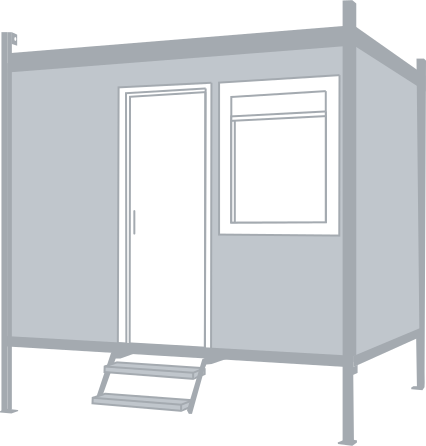
At Bunkabin, we supply a full range of units suitable for student living, from Site Sleepers to essential amenities such as toilet and shower blocks. Our temporary accommodation is robust, secure and comfortable, designed to meet planning permission requirements while giving students a functional and welcoming space to live. With our experience, we know how to support institutions and project managers under pressure to provide housing solutions that work.
Flexibility and responsiveness: our units can be deployed quickly to meet rising demand, providing a reliable solution during construction phases or when extra space is needed at short notice.
Cost-effectiveness: a budget-friendly alternative to permanent builds, helping project managers use resources more efficiently.
Minimal disruption: fast installation with little impact on day-to-day campus life, which is especially valuable during busy academic terms.
If you find yourself planning a purpose-built student accommodation construction project, such as for HMO property where you are required to house more than six residents, call us today to learn more about how temporary accommodation can assist with student housing needs and planning applications. Contact us on 0345 456 7899, or fill out an online form and we will return your call at a time suitable for you.
Testimonials
We approached Bunkabin in 2015 to deliver a turnkey accommodation solution for our performers from around the world who were performing at Her Majesty The Queen’s 90th Birthday Celebrations at Windsor this year. Subsequently 200 Bunkabins were ordered and work started on the planning of such a major logistical operation. In 22 days, 200 Bunkabins, complete with bedding kits, were delivered and installed and when our performers arrived they were amazed that we could offer an on-site solution that offered everything they needed. It made for a real village atmosphere with all nations joining together and we couldn’t have asked for more.
Bunkabins drivers were amazing – taking great care when loading and offloading not to damage the grass in the Private Grounds of Her Majesty The Queen and all in all the Bunkabins worked perfectly
Nick Brooks-Ward, H Power Group - Event Planning Services
Over the last 6 years we have increased the Student Village from initially 30 up to currently 274 en-suite Student Sleepers. The Student Village Company provide us with a flexible accommodation capacity, so as long as we have land available, we no longer need to turn away a student because of accommodation shortages.
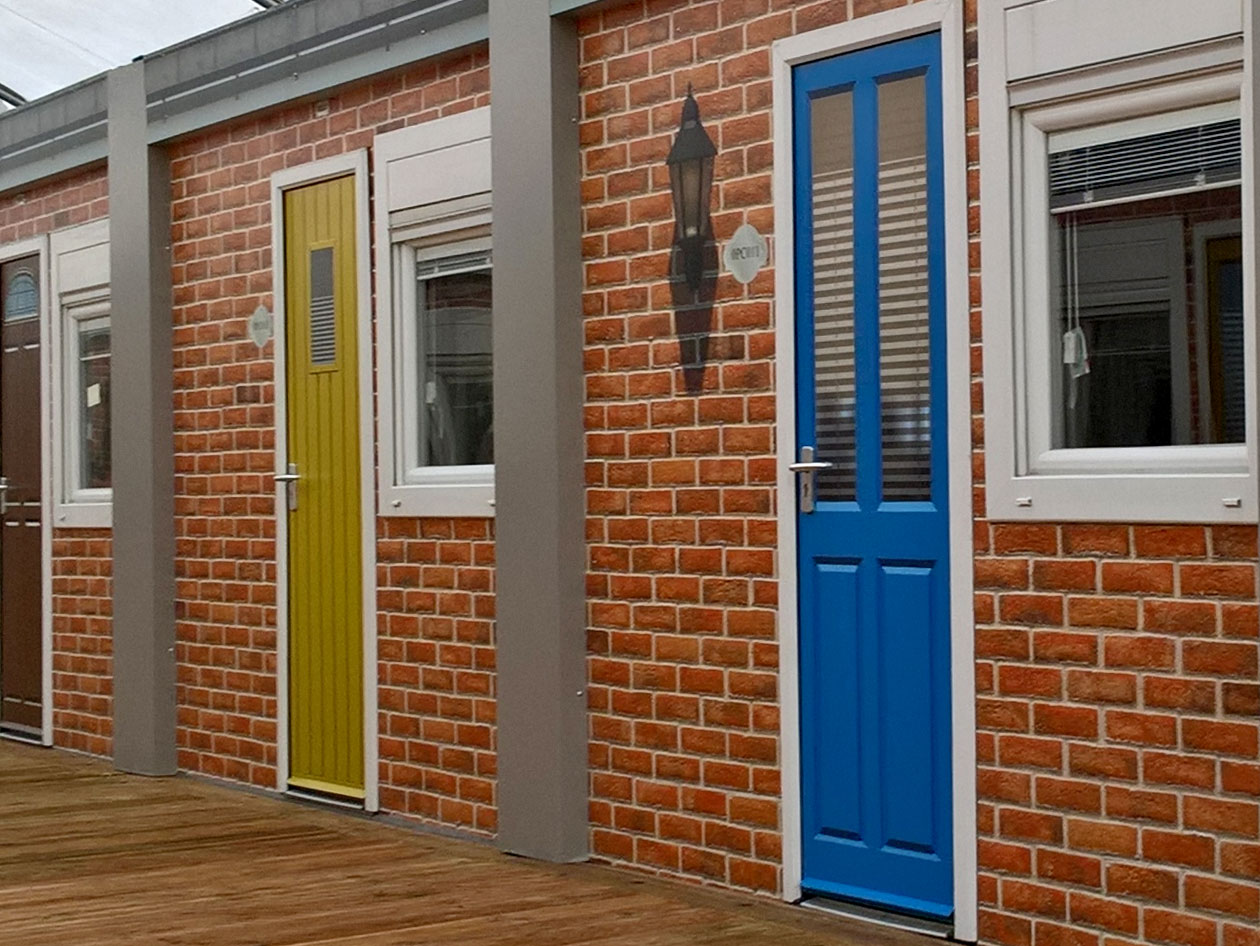
It is very difficult to predict exact intake numbers however The Student Village Company are able to provide additional capacity only a few weeks before freshers week. The decking, canopy and decals make an enormous difference. The students love them.
While Bunkabins aren’t complicated... There will undoutedly be a raft of questions you will need answering. So with this in mind, we have compiled a list of the most frequently asked ones and, handily, provided the answers to boot.
The aim was to find an accommodation solution that could be deployed quickly and safely, while exceeding industry standards of electrical, fire and structural safety and providing a comfortable living…
As a successful agricultural business, Valley Produce depends heavily on having the right onsite accommodation solutions in place for its seasonal workers. Bunkabin has been able to provide those…
How do you solve an issue of having more students arriving than you have available accommodation? Bunkabin works with Reaseheath College to support them as they expand,enabling them to grow their…
The Royal Navy found themselves requiring 302 more bed than they had available. Rather than costly and time-consuming building work being initiated an alternative tempory solution was sort and…
Her Majesty’s 90th Birthday Party was a celebration of The Queen’s life and involved more than 1,500 participants from around the United Kingdom and the World. It focused on her love of horses, her…
Bunkabin has long had a great working relationship with Glastonbury Festival. Our sleepers and shower blocks offer their management, staff and the supply personnel the comfortable environment they…