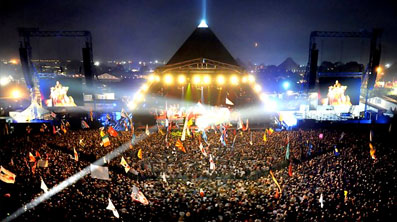
Whether you are organising live music, movie screenings, street food festivals or larger events across several days, careful event planning at an early planning stage makes the process a lot easier and helps avoid unnecessary stress.This outdoor event planning checklist fromGlastonbury accommodation supply veterans Bunkabin looks at the practical infrastructure that is needed to support your event, particularly modular accommodation, welfare units and portable restrooms that keep staff, vendors and attendees comfortable.
DEFINE YOUR EVENT SCOPE AND VENUE
Before confirming suppliers, you should define the scale and nature of your outdoor event.
Consider:
Expected number of attendees.
Duration - one day, a full week, or longer.
Type of event - live music, street food markets, corporate hospitality or community gatherings.
Location and ground conditions, including the possibility of muddy ground in wet weather.
Available space for stages, stalls, vendors and essential thoroughfare routes.
Parking and easy access for guests and delivery drivers.
Larger events will require additional staff, more bathroom facilities and greater accommodation capacity. Planning early allows you to secure modular units during periods of high demand, particularly in summer months when festivals and outdoor venues are heavily booked.
PLAN MODULAR ACCOMMODATION FROM THE START
Temporary accommodation is often treated as a last-minute addition, but for multi-day events it should form part of your core planning.
Positioning your accommodation on site reduces staff travel time, improves safety and helps teams remain present throughout the entire event. It also limits unnecessary stress caused by off-site logistics, particularly when attendees arrive in large volumes.
When selecting space for cabins, you should ensure there is adequate room for delivery, installation and service access, as well as clear essential thoroughfare routes for emergency vehicles. This doesn't take up as much space as you might think. At Bunkabin,we can deliver units anywhere on solid ground that has HGV access.
ARRANGE PORTABLE RESTROOMS AND BATHROOM FACILITIES
Bathroom facilities have a direct impact on attendee experience. Insufficient or poorly located portable restrooms create operational challenges and reputational risk.
Plan for:
Portable restrooms scaled to expected attendance.
Separatewashing and shower facilities for staff and guests where required.
Easy access routes that do not obstruct main walkways.
Regular servicing and cleaning throughout the event.
Accessible units to support inclusive event planning and reasonable adjustments.
For larger events or events lasting more than one day, shower blocks and welfare units become crucial. Modular bathroom facilities also provide a clear advantage in remote outdoor venues without permanent infrastructure.
PROVIDE POWER AND SERVICE INFRASTRUCTURE
Every outdoor event relies on a stable power source.
Assess:
Generator capacity.
Power distribution to stages, lighting, stalls and full kitchen operations.
Separate power feeds for accommodation units and welfare cabins.
Protection of cables in case of rain or inclement weather.
Plan for redundancy where possible. A secondary generator can prevent last minute disruption and protect the service provided to attendees.
PREPARE FOR INCLEMENT WEATHER AND SITE CONDITIONS
The great British weather remains one of the most significant challenges in outdoor event planning.
Consider:
Rain protection for stages and technical equipment.
Pop-up tent structures or larger tents to provide shelter.
Covered walkways between key areas.
Stable ground preparation to reduce issues with muddy ground.
Dry, insulated modular accommodation to protect staff comfort.
Providing shelter and secure cabins helps maintain operational continuity during poor weather. It also prevents unnecessary stress for event planners managing unexpected changes. You should also consider where you will place your modular accommodation. Fields are not suitable, as rainfall can turn dry ground into impassible terrain. So ask yourself what will happen to vehicle access if the skies open, so you can plan for easy collection as well as delivery.
ORGANISE FOOD, VENDORS AND WELFARE AREAS
If your event includes street food, alcohol vendors or caterers, allocate sufficient space for:
Stalls and service areas.
Safe food preparation.
Waste and recycling bins.
Clear signage directing attendees.
Dedicated rest areas for vendors.
Where caterers operate from a full kitchen environment within a cabin, modular units can create controlled preparation areas that support food safety and efficient service.
Careful zoning reduces congestion and allows delivery drivers to access supply areas without interfering with guests.
SECURE INSURANCE, SAFETY AND COMPLIANCE
At the planning stage, you should confirm that you have or can get:
Public liability insurance.
Any licences required if you plan to serve alcohol or play music.
First aid kit locations and dedicated medical space.
Emergency access routes.
Adequate lighting across the site.
Clear signage and communication points.
Inclusive event planning should include reasonable adjustments so all attendees can access facilities and navigate the venue safely.
Assign responsibilities clearly among your team. A dedicated contact for accommodation, another for power, and another for vendors will streamline communication and reduce operational risk.
FINAL CHECKS BEFORE THE EVENT
In the week leading up to your event:
Walk the entire event site.
Confirm cabin installation and positioning.
Test generator output and lighting.
Review parking and access routes.
Confirm delivery schedules for vendors.
Check weather forecasts and adjust cover plans if needed.
Advance preparation at this stage often makes the difference between a smooth event and one that involve constant and stressful reactive problem solving.
HOW MODULAR ACCOMMODATION SUPPORTS THE ENTIRE EVENT
Outdoor venues rarely come ready with the infrastructure required for complex events. Modular accommodation and welfare units allow you to create a fully functioning temporary site.
From sleeper cabins for additional staff to portable restrooms, shower blocks and dining units, Bunkabin offer facilities support both operational teams and attendees. These units are secure, with unique locks and weather-resistant cladding that improve working conditions and overall morale for the people you rely on to make your event work.
We approached Bunkabin in 2015 to deliver a turnkey accommodation solution for our performers from around the world who were performing at Her Majesty The Queen’s 90th Birthday Celebrations at Windsor this year. Subsequently 200 Bunkabins were ordered and work started on the planning of such a major logistical operation. In 22 days, 200 Bunkabins, complete with bedding kits, were delivered and installed and when our performers arrived they were amazed that we could offer an on-site solution that offered everything they needed. It made for a real village atmosphere with all nations joining together and we couldn’t have asked for more.
Bunkabins drivers were amazing – taking great care when loading and offloading not to damage the grass in the Private Grounds of Her Majesty The Queen and all in all the Bunkabins worked perfectly
Nick Brooks-Ward, H Power Group - Event Planning Services
Over the last 6 years we have increased the Student Village from initially 30 up to currently 274 en-suite Student Sleepers. The Student Village Company provide us with a flexible accommodation capacity, so as long as we have land available, we no longer need to turn away a student because of accommodation shortages.
It is very difficult to predict exact intake numbers however The Student Village Company are able to provide additional capacity only a few weeks before freshers week. The decking, canopy and decals make an enormous difference. The students love them.
While Bunkabins aren’t complicated... There will undoutedly be a raft of questions you will need answering. So with this in mind, we have compiled a list of the most frequently asked ones and, handily, provided the answers to boot.
The aim was to find an accommodation solution that could be deployed quickly and safely, while exceeding industry standards of electrical, fire and structural safety and providing a comfortable living…
As a successful agricultural business, Valley Produce depends heavily on having the right onsite accommodation solutions in place for its seasonal workers. Bunkabin has been able to provide those…
How do you solve an issue of having more students arriving than you have available accommodation? Bunkabin works with Reaseheath College to support them as they expand,enabling them to grow their…
The Royal Navy found themselves requiring 302 more bed than they had available. Rather than costly and time-consuming building work being initiated an alternative tempory solution was sort and…
Her Majesty’s 90th Birthday Party was a celebration of The Queen’s life and involved more than 1,500 participants from around the United Kingdom and the World. It focused on her love of horses, her…
Bunkabin has long had a great working relationship with Glastonbury Festival. Our sleepers and shower blocks offer their management, staff and the supply personnel the comfortable environment they…